
A vehicle at a gate is not simply arriving or leaving. It may be a contractor due on site, a delivery lorry outside its booked slot, an employee using the wrong entrance, or an unauthorised vehicle testing the perimeter. ANPR vehicle access management turns that moment into a controlled, recorded decision – without creating unnecessary delays for authorised traffic.
For warehouses, energy facilities, industrial estates, schools, offices and high-value commercial premises, vehicle access is often a weak point. Pedestrian doors may be protected by cards, biometrics or QR credentials, while a vehicle gate is opened remotely, by a fob or on sight alone. A properly designed ANPR system closes that gap by reading a registration plate, applying site rules and creating useful evidence from every access event.
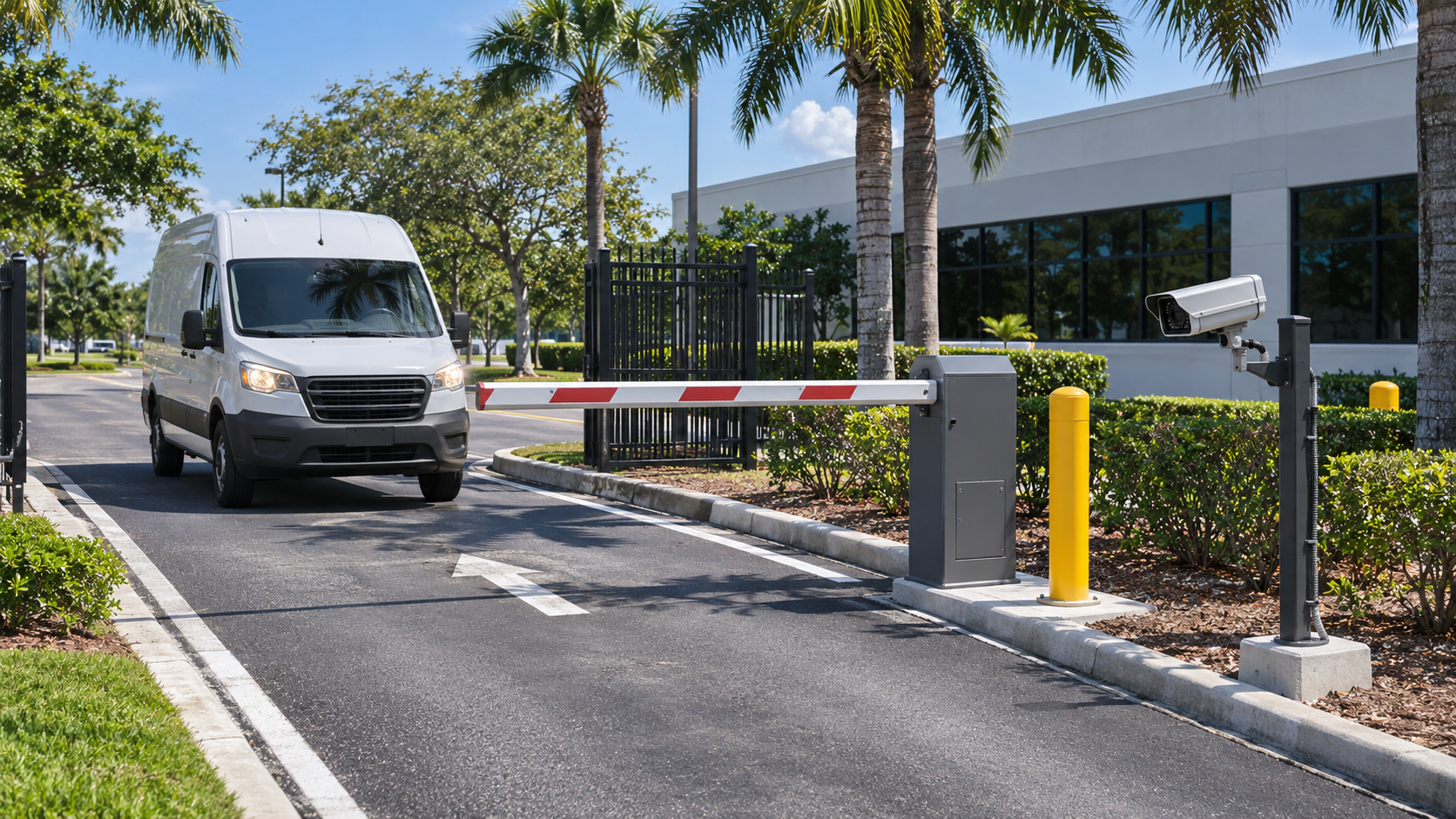
What ANPR vehicle access management does
Automatic Number Plate Recognition uses purpose-specified cameras and software to identify a vehicle registration mark. The system compares the read against approved, denied or monitored vehicle lists, then triggers an appropriate action. That may be opening a barrier, holding a gate closed, alerting security personnel or logging the event for investigation.
The value is not limited to automation. ANPR provides accountability. Facilities and security teams can see which vehicle entered, through which lane, at what time and, when integrated with CCTV, what happened around the transaction. This is particularly valuable where sites have multiple entrances, shared occupiers, delivery movements or limited on-site guarding.
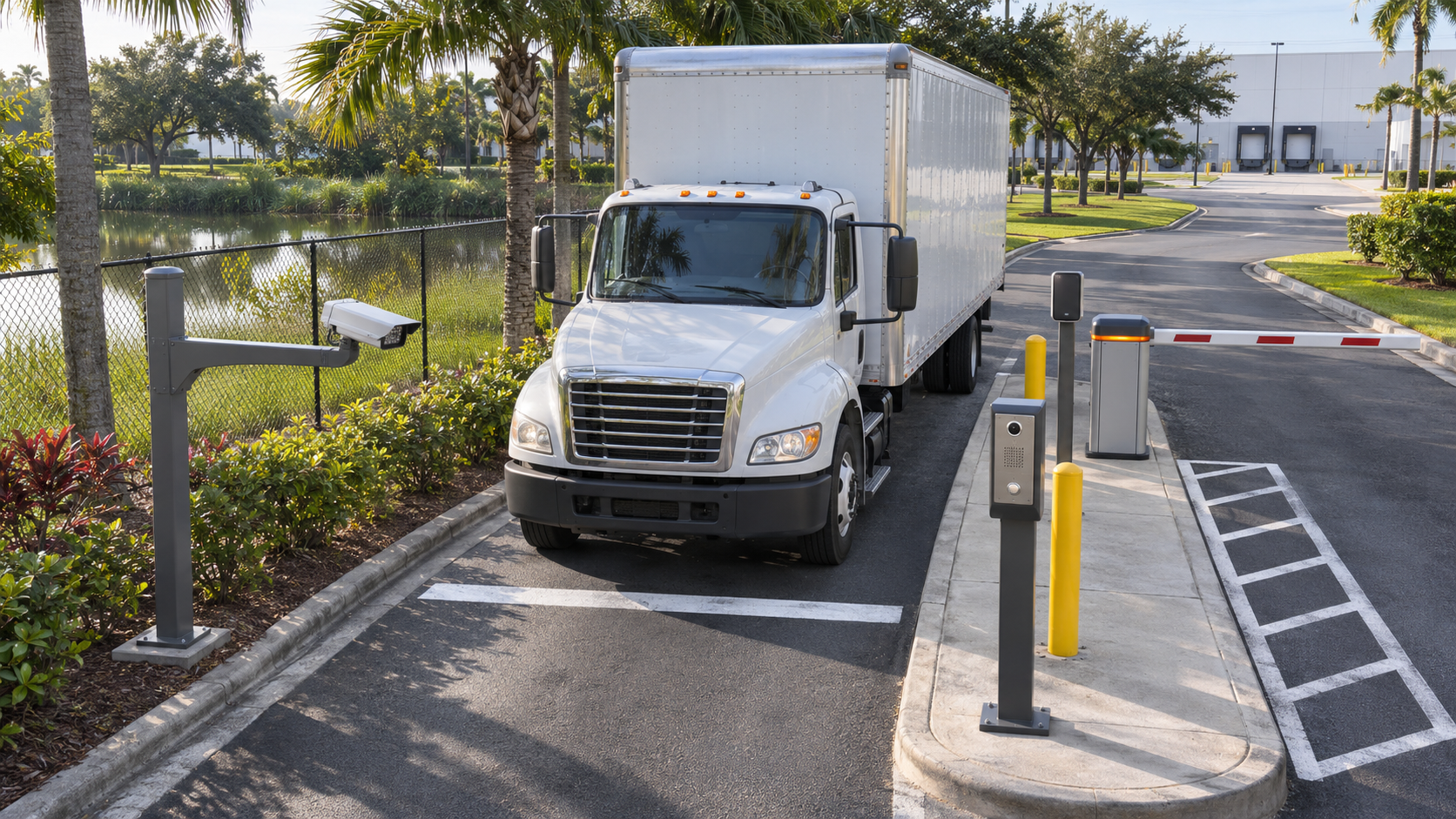
A good design recognises that a number plate is a vehicle credential, not a complete security decision. The system should be configured around the risks at the site. A staff car park may only need approved registrations and time schedules. A BESS facility, solar farm or logistics yard may require the registration to match a pre-booked delivery, a driver credential and a monitored gate intercom before access is granted.
Where vehicle entry controls make the biggest difference
High traffic alone does not always justify ANPR. The strongest case is where traffic volume, asset value and operational consequence meet.
At a warehouse or distribution centre, ANPR can distinguish staff, fleet vehicles, regular hauliers and unexpected arrivals. It can direct authorised lorries to the correct entrance while ensuring that late, unknown or blacklisted vehicles are referred to security. This reduces reliance on verbal instructions and helps prevent delivery yards becoming uncontrolled waiting areas.
For renewable-energy and critical-infrastructure sites, vehicle access needs careful treatment. Remote locations can have long perimeter lines, limited staffing and equipment with significant replacement value. ANPR can operate alongside monitored CCTV, thermal detection, intruder systems and access-controlled pedestrian gates, giving operators a clearer picture of activity at the boundary.
At managed commercial properties, it can remove friction from tenant parking while protecting reserved spaces, service yards and out-of-hours access routes. Schools, healthcare sites and hotels can use the same principle, but their rules may need greater flexibility for visitors, taxis, emergency services and temporary contractors.
The system needs more than a camera at the gate
ANPR performance depends on correct engineering. A camera positioned too high, too far from the lane or exposed to poor lighting will produce inconsistent reads. Reflections, headlights, dirt, adverse weather, fast-moving vehicles and non-standard plates can all affect accuracy.
A site survey should establish the approach speed, lane layout, stopping point, barrier position, lighting conditions and available network infrastructure. It should also identify whether vehicles can tailgate through a gate or use an adjacent exit lane to enter. These practical details determine camera selection, lens choice, illumination and whether additional safety devices are required.
Build rules around real site operations
Access rules should be clear enough to manage automatically and flexible enough to avoid disrupting legitimate work. Common configurations include staff vehicles allowed during shift hours, approved contractors permitted only for scheduled dates, delivery fleets admitted through a service entrance and denied registrations generating an alert.
It is also sensible to set exception procedures before the system goes live. What happens if a registration is read incorrectly? Who can authorise a visitor after normal hours? Can a gate be released remotely if an ambulance, fire appliance or police vehicle needs access? Security controls must never compromise emergency response or safe egress.
For higher-risk facilities, ANPR should not be the only condition for entry. A plate can identify a vehicle, but it does not prove that the authorised driver is behind the wheel or that the vehicle is carrying an expected load. Combining ANPR with intercom verification, access credentials, CCTV oversight or booking data gives security teams better control where it matters most.
Integrating ANPR with security and operations systems
The best ANPR installations connect vehicle access to the wider security strategy. Integrating ANPR with CCTV allows operators to retrieve visual footage linked to a registration and time. Integrating it with access control can associate a vehicle movement with a staff member, contractor or permit holder. A video intercom provides a practical escalation route when the system cannot approve a vehicle automatically.
For sites with a control room or remote monitoring, alerts can be prioritised. A known delivery vehicle outside schedule may prompt a call to the operations team. A blacklisted vehicle at a perimeter gate may require immediate live review. This approach is more effective than sending every event to an operator, which can create alarm fatigue and slow response.
Network resilience also deserves attention. ANPR cameras, barriers, intercoms and gate controllers depend on power and communications. For exposed or operationally critical sites, system design should consider protected power, local decision-making during network interruption and clear recovery procedures. The gate must behave safely if connectivity fails, while preserving the security posture agreed by the site.
Data protection and evidence handling
Vehicle registration marks are personal data when they can be linked to an individual. UK organisations using ANPR should therefore have a defined purpose, suitable privacy information, controlled user access and a proportionate retention policy. Recording every plate indefinitely is rarely justified.
The retention period should reflect the operational need. A busy car park may need short-term records for incident investigation. A high-security location may have a stronger case for longer retention, provided this is documented and reviewed. Footage and plate data should be protected from unauthorised access, with audit trails showing who searched or exported records.
Clear signage at the entrance matters. It should explain that ANPR and CCTV are in use, identify the organisation responsible and direct people to further privacy information. These measures support transparency while also reinforcing that vehicle access is actively managed.
Questions to resolve before specifying a system
Before selecting equipment, decision-makers should be able to answer four practical questions:
- Which vehicles should enter automatically, and under what times or conditions?
- What must happen when the system cannot confidently read or approve a registration?
- Which events require an alert, recorded evidence or security intervention?
- How will gates, barriers and emergency access operate during power or network faults?
The answers shape the technical design and prevent a system being specified around features rather than operational risk. They also help define acceptance testing. An installation should be tested in daytime and darkness, with typical vehicle speeds, plates, deliveries and exception cases – not just with one vehicle positioned perfectly at the gate.
Maintenance protects day-to-day performance
ANPR is often treated as a fit-and-forget system until a barrier fails to open or a critical vehicle movement cannot be verified. Cameras need cleaning and alignment checks. Gates and barriers need safety inspections. Firmware, access lists, event storage and network health require planned review.
Maintenance also keeps the rules current. Staff leave, contractors change, fleet registrations are replaced and operating hours shift. Outdated allow lists create both inconvenience and risk. A managed service should include periodic review of permissions, recorded faults, read-rate performance and any recurring access exceptions.
Pulsar Vertex designs ANPR as part of an integrated access, CCTV and perimeter-protection solution, with the engineering, installation and ongoing support required for demanding commercial and industrial environments.
The most effective vehicle access control does not make a site feel difficult to use. It makes authorised movement predictable, exceptions visible and unauthorised entry far harder to achieve. Start with the traffic your site actually receives, define the decisions that need to be made at the gate, and build the system around those operational realities.